
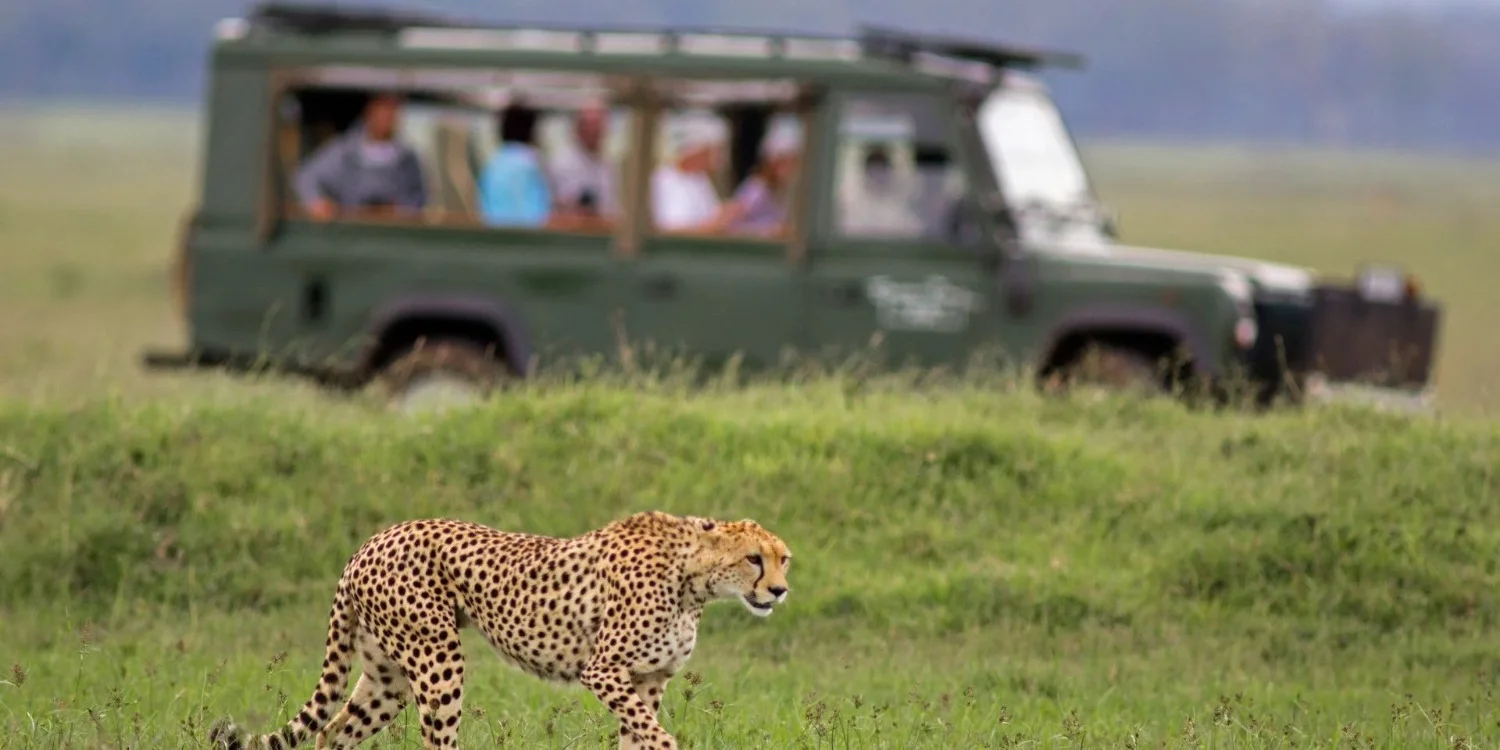
The First Morning in Kenya
The first thing you notice is the silence. It is still dark when the game vehicle leaves the camp. It is cold outside, the road is hardly visible, and on the other side of the headlights, the savannah starts to wake up
You do not know what you can see there. That uncertainty is part of the experience.
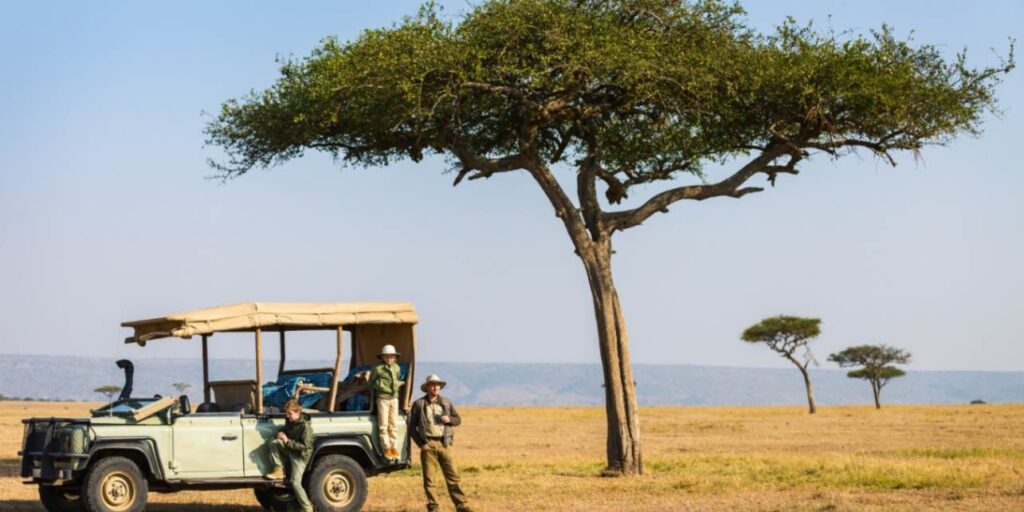
As the sky begins to turn gold, Kenya slowly reveals itself. Grass becomes illuminated first, then acacia trees are seen on the horizon. Some birds begin to call somewhere far away from you while the vehicle quietly goes along the open field.
Then your guide slows down. Everyone looks ahead.
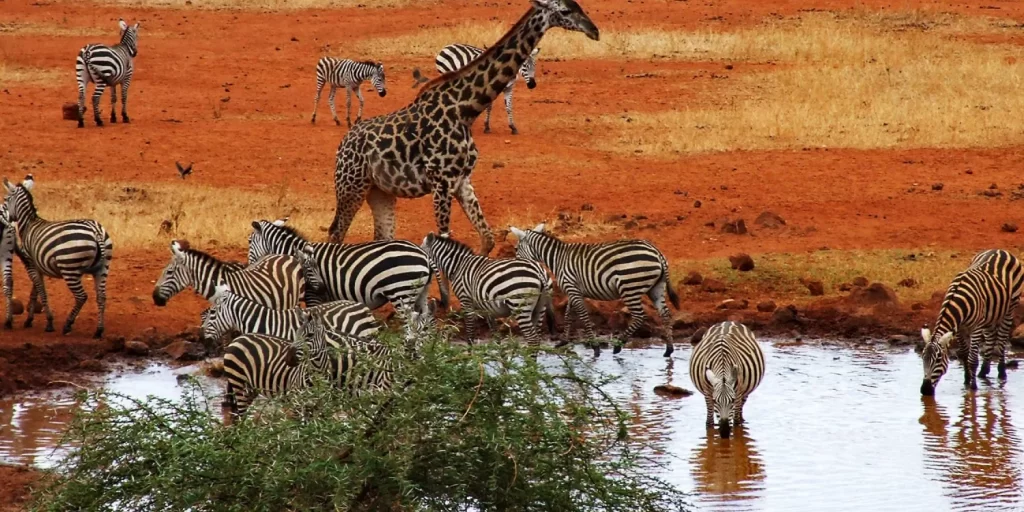
A herd of zebras is grazing far ahead.
A little further, a giraffe comes into view between the trees, moving with this usual slow rhythm which is completely independent from people who are looking at it.
Nobody says anything. Cameras are taken out, binoculars are raised, but you only watch it.
It is the thing which makes a Kenya wildlife experience different from ordinary sightseeing. There are no entrance gates to the next attraction site and no timetable. No fixed schedule telling you when the next moment will happen.
You wait. You watch. You track the landscape.
But sometimes, all Kenya will give you is a glimpse. At other times, nature gives you that memory that will stay with you even after you return home.
When the Savannah Comes Alive
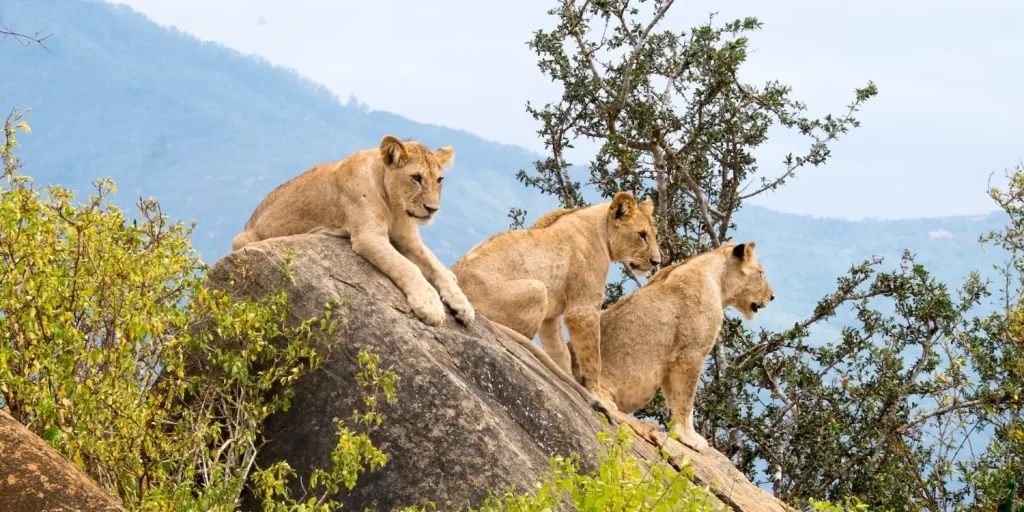
The morning grows brighter, but the safari has only just begun.
The plains extend all around and one does not know where the next sighting would be. The guide keeps observing his surroundings and not only the road but the movements of the birds, tracks and behavior of the animals far away.
There came a group of elephants.
Slowly, these elephants move through the savannah with the youngsters by the side of the elders. The vehicle stops and silence falls around. Nobody moves for a few minutes.
The elephants start moving.
Such is a safari journey. One can spend twenty minutes with a herd that crosses one’s way and after that, can travel for an hour without spotting any animal bigger than a bird. Such waiting is a part of Kenya wildlife experience.
The savannah does not entertain you by showing its wonders anytime you wish. You are there when something happens in the savannah.
When You Finally See a Lion
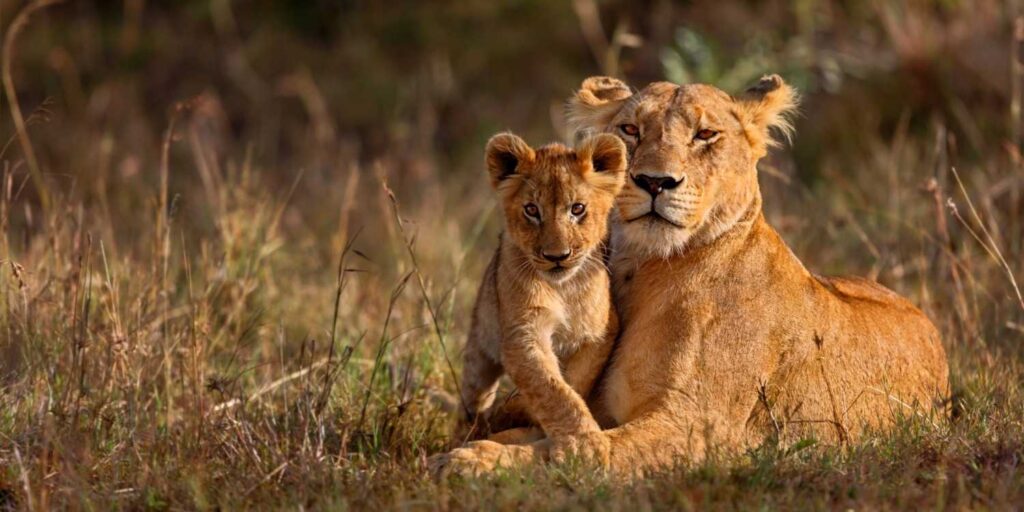
You came looking for lions.
But the safari doesn’t begin with one.
There are tracks in the dust, a few distant calls and your guide scanning the grass with quiet concentration. The vehicle moves slowly before stopping again.
Then you see it.
A lion is resting beneath the shade of a tree, almost perfectly still. For a few seconds, it is difficult to understand how something so large could disappear so easily into the landscape.
Everyone lowers their voices.
The lion lifts its head, looks towards the vehicle and settles back into the grass. There is no dramatic chase. No performance. Just a wild animal going about its day while you happen to be there.
That is the beauty of a Kenya safari. A lion sighting isn’t simply something to tick off your list. It is a moment of observation, brief, quiet and completely unscripted.
You may have driven for hours to find it. And in the end, you might remember those few silent minutes more than anything else.
The Great Migration: When the Landscape Moves
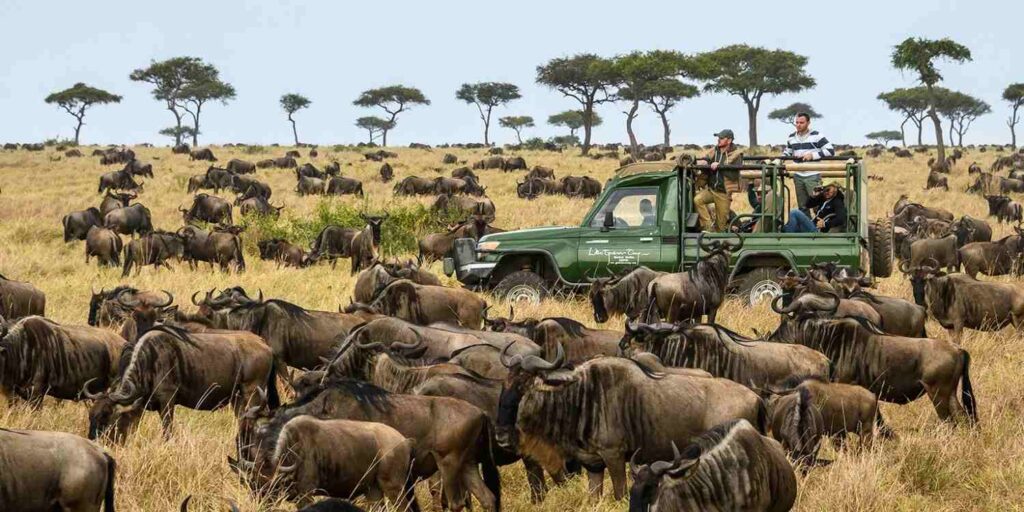
There are moments in Kenya when it feels as though the entire landscape is moving.
Across the Masai Mara, thousands of wildebeest and zebras travel in search of fresh grazing and water. Dust rises behind the herds, the grass seems to stretch endlessly, and predators wait for opportunities in the distance.
You might expect the Great Migration to be one dramatic event. In reality, it is a story of movement, waiting and uncertainty.
At a river crossing, vehicles may gather quietly while the animals hesitate at the edge. One animal moves forward. The herd pauses. Then, suddenly, the river comes alive.
Not every safari will witness a river crossing, and that’s precisely why the experience feels so powerful when it happens.
Even without one, watching the herds move across the Mara is extraordinary. You don’t watch the Great Migration from a seat. For a moment, you watch an entire ecosystem in motion.
Kenya Isn’t Only About the Big Five
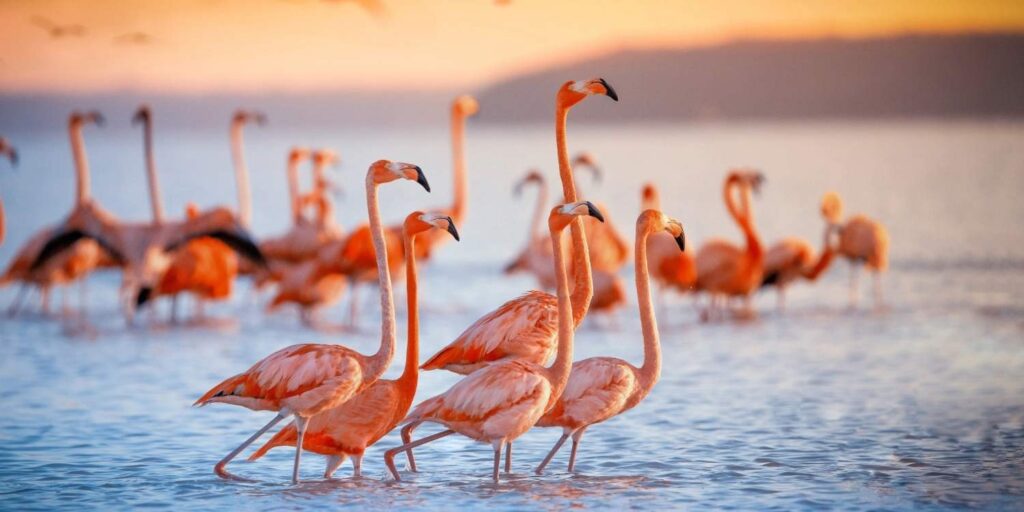
After a few game drives, you begin to realise that the most memorable parts of a Kenya wildlife experience aren’t always the animals everyone comes hoping to see.
A secretary bird walks through the grass, looking almost too elegant for the landscape. A family of warthogs disappears into the bushes. Hippos surface in the water, while crocodiles remain almost completely still along the riverbank.
Then there are giraffes.
You may spot them from far away first, their long necks rising above the trees. As the vehicle gets closer, you notice how calmly they move through the landscape, stopping occasionally to feed before continuing on.
And sometimes, the smallest details stay with you.
A brightly coloured bird on a branch.
Fresh tracks pressed into the mud.
A herd of antelope suddenly became alert.
A monkey watching the safari vehicle as carefully as you watch it.
The Kenya safari experience is richer when you stop looking only for the famous sightings. Because the savannah has a story happening everywhere. You just have to start noticing it.
The Elephant That Walked Past
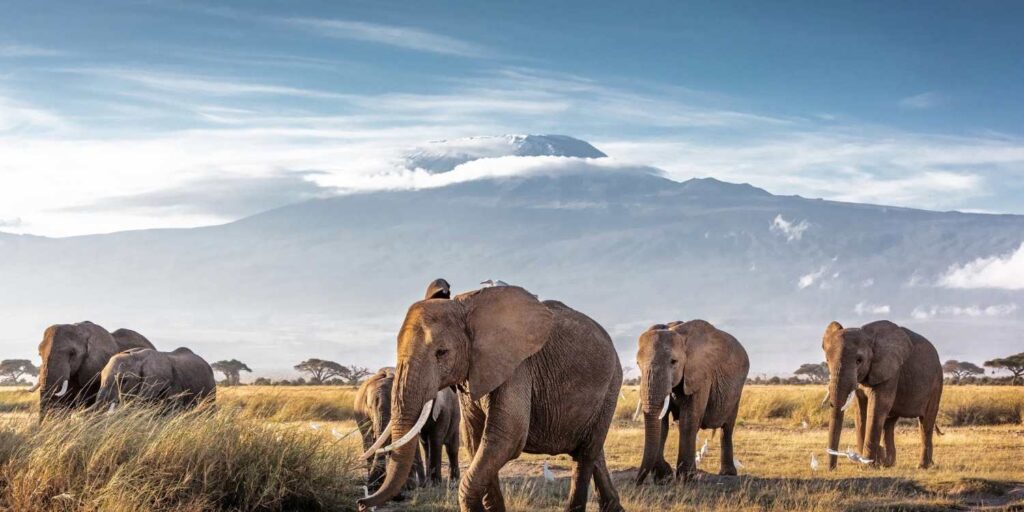
Your safari is underway and then your guide stops suddenly.
In front of you, there is an elephant on the track.
It doesn’t care about the vehicle and just moves ahead, taking careful steps while its ears sway in the breeze.
Everyone is watching.
Watching an elephant at such proximity in the wild is very different from anything you might have seen before. You see the dirt on its legs, the roughness of its hide and how it takes a break to feed on some leaves of a tree.
Then another elephant comes along.
And another one.
A calf moves in the herd as it passes on the road and disappears into the grass.
For a few minutes, your safari car isn’t moving at all and yet no one complains.
It is such instances that make Kenya wildlife much more than just a gathering of renowned animals. You start paying attention to behaviors, relationships and minor movements that might easily escape you if you were constantly rushing around looking for something.
Eventually the elephant disappears out of sight.
The car starts moving but you are all changed by this safari experience.
If you’re booking your holiday with iTour, our team can also assist you in selecting suitable flight options based on your preferred schedule and budget.
Beyond the Safari Vehicle
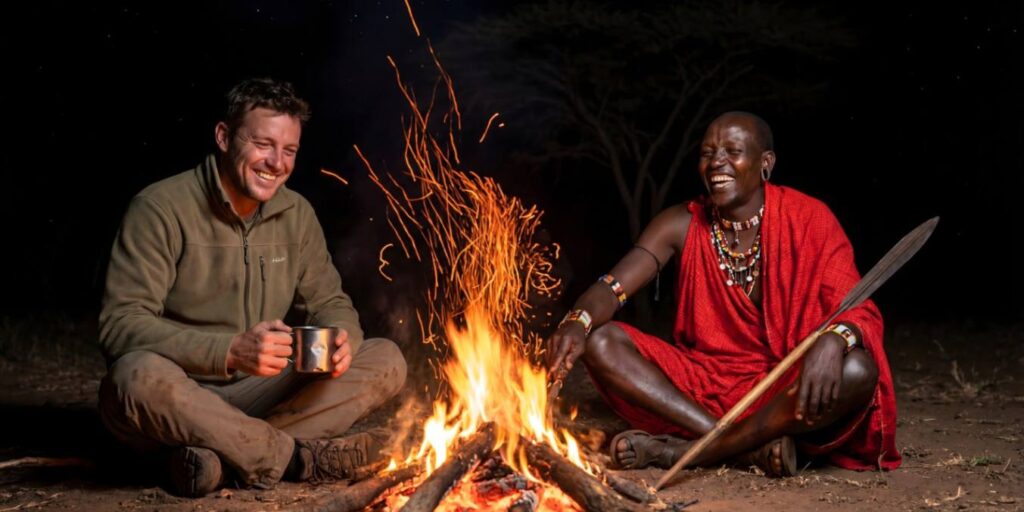
Your Kenya wildlife holiday need not come to an end when your game drive ends.
At the camp, the atmosphere shifts.
Breakfast is taken under the open sky. The day can be spent lazing by the pool and reading while listening to the sounds of nature. Some camps offer a guided walk or other camp activities like a campfire activity after dusk.
The environment becomes rich with sights which you had not noticed earlier from the game drive vehicle, such as the flying birds, the tracks on the ground, or the way the sun casts its rays on the savannahs. The guide may also show you animal signs from the night.
Over dinner, travellers exchange stories about the day’s sightings. Someone saw a leopard. Another saw some elephants at a waterhole. All seem to have seen a different Kenya.
That is what makes a safari feel personal.
The wildlife may be the reason you arrive in Kenya, but the moments between the game drives often become part of the story too.
When the Sun Goes Down
By mid afternoon, the savannah starts to transform itself.
The warmth dissipates. Shadows fall upon the grass. As the animals start to emerge with the cooling temperatures, there is a glow in the air that surrounds the plains.
This is when the safari experience starts becoming a movie experience.
Elephants move into view across the horizon. Giraffes take on the form of silhouettes among the trees. Antelopes collect themselves in the open plains while the birds make their way back home.
The vehicle stops at some point where you have an open view of the landscape.
There are no attractions or landmarks anywhere. There is just Kenya.
With the dropping sun, the sky changes its color from a bright noon to the warmth of gold, orange, and red. And for those few minutes, it feels as if time has stopped moving forward in the savannah.
A drink is opened.
A picture is clicked.
Somebody sits and looks around.
And sometimes, a Kenya safari is not always about going further ahead. It is just being there when the day ends.
The Night Sounds Different
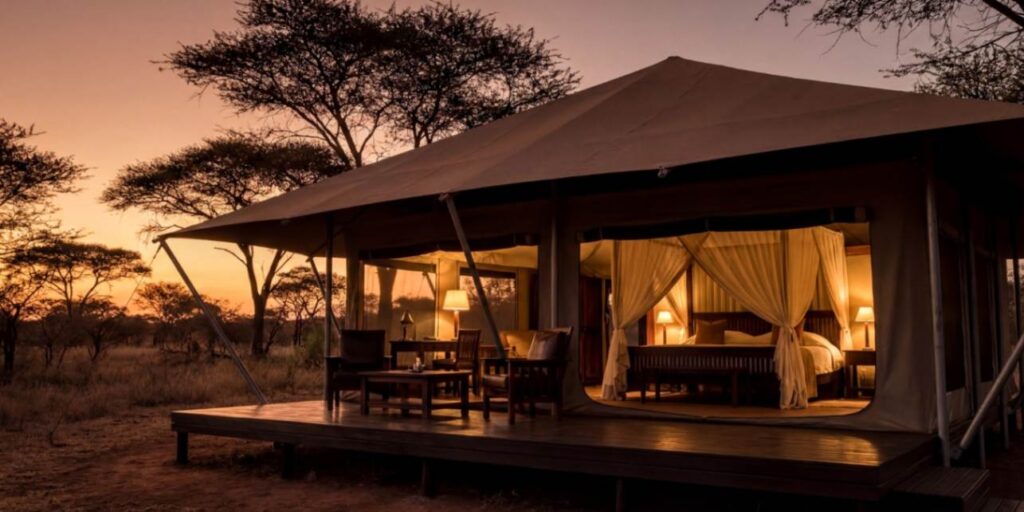
Once darkness settles over the savannah, Kenya feels like a completely different place.
The last light disappears behind the horizon. The temperature drops, and the familiar landscape becomes a dark outline beyond the camp.
Then the sounds begin.
A distant animal calls from somewhere beyond the tents. Insects fill the air with their steady rhythm. Branches move in the darkness. Every now and then, a sound comes from far across the plains, impossible to place.
Inside the camp, the evening continues around a fire.
Stories are shared. Dinner is served. Guides talk about the animals seen that day and the tracks they noticed along the way.
But outside the circle of light, the wilderness carries on. That contrast stays with you.
You realise that the Kenya wildlife experience isn’t confined to daylight game drives. The landscape has its own rhythm after sunset and you are simply a guest in it.
By morning, the familiar safari vehicle will be waiting again.
And the savannah will have another story to tell.
The People Behind the Safari
The images captured from a safari often stick in one’s memory.
A lion hiding under a tree.
Elephants walking on the savannah.
A herd of giraffes in the evening glow.
However, staying in Kenya for a while allows one to get acquainted with the locals.
A guide will often be that individual who makes a safari tour interesting. He will notice the traces that you would not see, hear the sounds in the distance and tell you when it is necessary to move slowly, stop and even watch the animals.
And then, there are the individuals working at the camps and lodges, those who receive you after the safari and recall your preferences regarding the coffee and thus make you feel more comfortable.
In many parts of Kenya, local communities are tightly linked with tourism and wildlife conservation.
And somewhere along the line, you will come to realise one thing:
You are not only visiting Kenya to observe its wildlife, but experiencing a country through its people.
A Safari Changes Your Sense of Time
A few days in Kenya will mean that you won’t look at your watch anymore.
It is not the hour of the day when the sun comes up, but it is when it is light out.
It is not the time of the day but it is the time of the movements of the animals.
The afternoons slow down their pace.
The evenings come with the sunset.
There is no hurry to move on to the next attraction, since nature decides how it all unfolds.
One afternoon may be spent waiting for lions who decided to spend their time at another spot than the one you wanted to go to. One morning you spend following a group of elephants, and you don’t see much else during the day.
And somehow, it all works out.
In Kenya, you learn to enjoy the unplanned moments, the sudden presence of an animal, the colours of the savannah changing throughout the day, the conversations around the campfire.
You measure the day differently.
You are not looking at the amount of places you visited, but the amount of experiences that you had.
And maybe it is one of the greatest things about safaris.
What You Take Home From Kenya
Eventually, the safari ends.
The vehicle returns to camp for the last time. The bags are packed. The same roads that felt unfamiliar on the first morning now carry a strange sense of familiarity.
You may have hundreds of photographs.
But the memories that stay with you are often smaller.
The sound of elephants moving through the grass.
A lion lifting its head beneath a tree.
A giraffe appeared unexpectedly between the acacias.
The first light over the Mara.
A conversation around the campfire after sunset.
You also leave with a different appreciation for distance and time. A landscape doesn’t need to be filled with buildings or attractions to hold your attention.
That is the lasting pull of a Kenya wildlife experience.
It gives you stories rather than souvenirs.
And long after the photographs have been saved and the journey is over, you may still find yourself thinking about that morning when the savannah slowly came alive.
Browse our Honeymoon packages available throughout the year.
Planning Your Own Kenya Wildlife Experience
The story might start with the wildlife but crafting the right Kenya safari is about the way one would like to experience it.
The Masai Mara is certainly the place to start with and particularly when it comes to great cats and Great Migration. Yet Kenya has much more to offer both in terms of landscapes and wildlife.
A well-planned journey could include:
- Masai Mara – Classic savannah, big cats and seasonal migration
- Amboseli – Elephants with views towards Mount Kilimanjaro
- Lake Nakuru – Birdlife, rhinos and a different landscape
- Samburu – Northern Kenya’s distinctive scenery and wildlife
- Safari camps and lodges – From comfortable stays to intimate luxury camps
The season will add a specific atmosphere to the journey. As wildlife moves and landscapes change, there are various seasons when something particular can be seen and experienced.
It is recommended for the first time safari traveler to have more time at fewer places rather than constantly move between parks.
First select the wildlife experience and then construct the route based on it.
Why Kenya Is Worth Experiencing with iTour
Your Kenya safari holiday shouldn’t be all about checking parks and accommodation.
Instead, your Kenya safari should revolve around the memories that you actually wish to make.
This could mean witnessing lions in the Mara,or watching elephants under Mount Kilimanjaro.
Or even spending time in a private camp with sounds of nature forming the backdrop of your nights.
With iTour, we can craft your Kenya wildlife adventure according to your traveling preference and pace, and experiences from the first day till the last safari ride.
You just have to let us know what kind of memories you wish to make.
Frequently Asked Questions
1. What is the best place for a Kenya safari?
The Masai Mara is one of the most popular choices for a first Kenya safari, especially for big-cat sightings and the Great Migration. Other parks, such as Amboseli and Samburu, offer very different landscapes and wildlife experiences.
2. How many days are enough for a Kenya wildlife experience?
Around 6–8 days can work well for a first safari, allowing enough time for two or three wildlife regions without making the journey feel rushed.
3. When is the best time to visit Kenya for wildlife?
It depends on what you want to experience. Wildlife can be seen throughout the year, while the Great Migration follows a seasonal pattern. Your itinerary should be planned around the experiences you prioritise.
4. Is Kenya good for a honeymoon?
Absolutely. A safari can be combined with private camps, scenic experiences and slower days to create a honeymoon that feels very different from a typical beach holiday.
5. Can I combine Kenya with another destination?
Yes. Kenya can be combined with a coastal stay or another destination depending on your available time. The key is to leave enough time for the safari itself rather than making it one rushed stop.
6. Is a Kenya safari suitable for families?
Yes. Families can enjoy wildlife drives and comfortable safari camps, with the itinerary and activities planned around the children’s ages and interests.
7. Can iTour customise a Kenya safari?
Yes. Your Kenya wildlife experience can be planned around your preferred parks, accommodation, travel pace, experiences and budget.
You Don’t Leave Kenya Quite the Same
A Kenya safari begins with the expectation of seeing wildlife.
You leave with something more.
The memory of a lion beneath a tree.
Elephants crossing your path.
The endless movement of the Mara.
Evenings around a fire.
And mornings when the savannah seemed to stretch forever.
Some journeys are remembered for the places you visited.
Kenya is remembered for the moments that happened while you were there.
You don’t need to see everything. You don’t need to chase every famous sighting.
Sometimes, you just need to be there when the wild decides to show you something.
Leave a Reply